Featured
Table of Contents
Next, compare what your advertisement platforms report versus what in fact took place in your organization. Now compare that number to what Meta Ads Manager or Google Advertisements reports.
Evaluating Your SEM Strategy to Find Growth Opportunities
Lots of online marketers find that platform-reported conversions significantly overcount or undercount truth. This happens since browser-based tracking deals with increasing limitationsad blockers, cookie constraints, and privacy features all create blind spots. If your platforms believe they're driving 100 conversions when you actually got 75, your automated budget decisions will be based upon fiction.
File your consumer journey from first touchpoint to last conversion. Where do individuals enter your funnel? What steps do they take before converting? Are you tracking all of those actions, or simply the last conversion? Multi-touch presence becomes necessary when you're attempting to recognize which campaigns really deserve more budget.
Converting Ad Clicks to Revenue
This audit exposes precisely where your tracking structure is solid and where it needs reinforcement. You have a clear map of what's tracked, what's missing out on, and where data discrepancies exist. You can articulate specific gapslike "our Meta pixel undercounts mobile conversions by about 30%" or "we're not tracking mid-funnel engagement that predicts purchases." This clarity is what separates reliable automation from pricey mistakes.
iOS App Tracking Transparency, cookie deprecation, and privacy-focused browsers have fundamentally altered how much information pixels can record. If your automation relies exclusively on client-side tracking, you're enhancing based upon insufficient details. Server-side tracking fixes this by capturing conversion data directly from your server instead of counting on web browsers to fire pixels.
Setting up server-side tracking normally involves linking your site backend, CRM, or ecommerce platform to your attribution system through an API. The precise execution differs based on your tech stack, however the principle stays constant: capture conversion events where they really happenin your databaserather than hoping an internet browser pixel captures them.
For SaaS business, it means tracking trial signups, product activations, and subscription begins from your application database. For lead generation services, it means linking your CRM to track when leads really become qualified opportunities or closed deals. A robust marketing attribution and optimization setup depends upon this server-side structure. Once server-side tracking is executed, validate its accuracy instantly.
Converting Search Traffic to Revenue
The numbers ought to line up carefully. If you processed 200 orders yesterday, your server-side tracking need to show around 200 conversion eventsnot 150 or 250. This verification step catches setup errors before they corrupt your automation. Maybe your API combination is shooting replicate events. Maybe it's missing certain deal types. Perhaps the conversion worth isn't going through properly.
The immediate advantage of server-side tracking extends beyond simply counting conversions properly. You can now track actual earnings, not just conversion events. You can see which campaigns drive high-value clients versus low-value ones. You can recognize which advertisements create purchases that get returned versus ones that stick. This depth of information makes automated optimization dramatically more efficient.
That's when you know your information foundation is solid enough to support automation. The attribution design you choose determines how your automation system evaluates project performancewhich directly affects where it sends your budget.
It's easy, but it neglects the awareness and factor to consider campaigns that made that final click possible. If you automate based purely on last-touch information, you'll systematically defund top-of-funnel projects that present brand-new consumers to your brand name. First-touch attribution does the oppositeit credits the initial touchpoint that brought someone into your funnel.
Leveraging Deep Analytics in Modern PPC
Automating on first-touch alone indicates you may keep funding campaigns that create interest but never ever convert. Multi-touch attribution disperses credit throughout the whole consumer journey. Somebody might find you through a Facebook ad, research study you via Google search, return through an email, and lastly transform after seeing a retargeting advertisement.
If a lot of customers transform instantly after their very first interaction, simpler attribution works fine. If your common client journey involves several touchpoints over days or weekscommon in B2B, high-ticket ecommerce, and SaaSmulti-touch attribution becomes essential for precise optimization.
Evaluating Your SEM Strategy to Find Growth OpportunitiesThe default seven-day click window and one-day view window that most platforms use may not show truth for your organization. If your common consumer takes three weeks to choose, a seven-day window will miss conversions that your campaigns in fact drove.
If the attribution story doesn't match what you understand happened, your automation will make decisions based on inaccurate presumptions. Numerous marketers find that platform-reported attribution varies significantly from attribution based on total consumer journey information.
This inconsistency is precisely why automated optimization needs to be developed on extensive attribution instead of platform-reported metrics alone. You can with confidence state which ads and channels really drive profits, not simply which ones occurred to be last-clicked. When stakeholders ask "is this project working?" you can answer with data that represents the complete client journey, not just a piece of it.
Improving CTR Using High-Impact Assets
Before you let any system start moving cash around, you require to specify exactly what "great efficiency" and "bad performance" imply for your businessand what actions to take in action. Start by developing your core KPI for optimization. For the majority of performance online marketers, this comes down to ROAS targets, CPA limits, or revenue-based metrics.
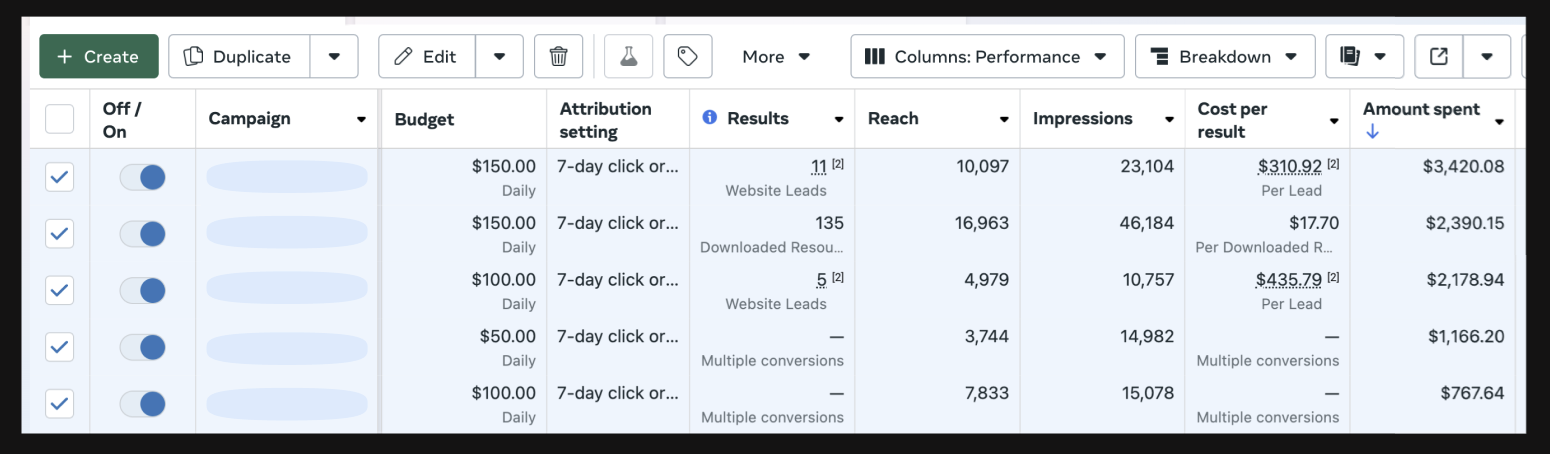
"Increase ROAS" isn't actionable. "Scale any project accomplishing 4x ROAS or greater" offers automation a clear regulation. Set minimum thresholds before automation acts. A campaign that spent $50 and generated one $200 conversion technically has 4x ROAS, however it's too early to call it a winner and triple the budget.
This avoids your automation from chasing after analytical noise. Evaluating tested advertisement invest optimization strategies can assist you develop efficient limits. An affordable beginning point: require at least $500 in spend and at least 10 conversions before automation thinks about scaling a campaign. These thresholds ensure you're making decisions based on significant patterns rather than lucky flukes.
If a campaign hasn't produced a conversion after spending 2-3x your target certified public accountant, automation should lower budget plan or pause it completely. But integrate in proper lookback windowsdon't evaluate a campaign's efficiency based on a single bad day. Take a look at 7-day or 14-day performance windows to smooth out daily volatility. Document everything.
If a campaign hasn't produced a conversion after investing 2-3x your target CPA, automation should lower budget plan or pause it completely. Build in appropriate lookback windowsdon't evaluate a project's efficiency based on a single bad day.
Expert Display Advertising Best Practices for Conversions
If a project hasn't generated a conversion after spending 2-3x your target certified public accountant, automation ought to minimize budget plan or pause it entirely. Build in suitable lookback windowsdon't judge a campaign's efficiency based on a single bad day. Look at 7-day or 14-day efficiency windows to ravel daily volatility. File whatever.
If a project hasn't generated a conversion after investing 2-3x your target certified public accountant, automation should lower budget or pause it completely. Build in proper lookback windowsdon't judge a project's performance based on a single bad day. Take a look at 7-day or 14-day efficiency windows to ravel daily volatility. File everything.

Latest Posts
Evaluating Traditional Grants Vs Strategic Partnership Models
Top Giving Trends Shaping Modern CSR
Launching Proven Regional Giving Models